
Author(s):Vinoin Devpaul Vincely, Xingjian Zhong, Kristie Huda, Swathi P. Katakam, Joshua C. Kays, Allison M. Dennis, Carolyn L. Bayer
ABSTRACT
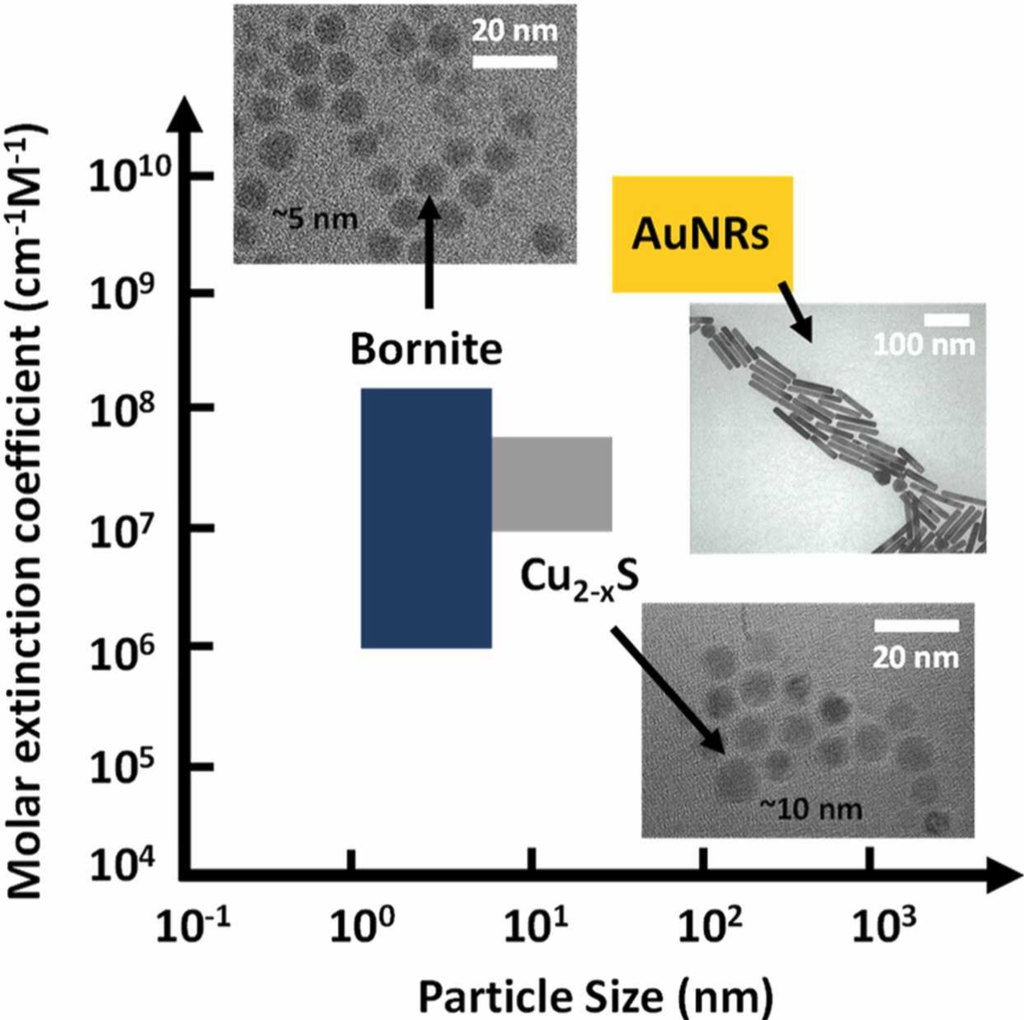
In this study, we demonstrate the potential of the bornite crystal structure (Cu5FeS4) of copper iron sulfide as a second near infrared (NIR-II) photoacoustic (PA) contrast agent. Bornite exhibits comparable dose-dependent biocompatibility to copper sulfide nanoparticles in a cell viability study with HepG2 cells, while exhibiting a 10-fold increase in PA amplitude. In comparison to other benchmark contrast agents at similar mass concentrations, bornite demonstrated a 10× increase in PA amplitude compared to indocyanine green (ICG) and a 5× increase compared to gold nanorods (AuNRs). PA signal was detectable with a light pathlength greater than 5 cm in porcine tissue phantoms at bornite concentrations where in vitro cell viability was maintained. In vivo imaging of mice vasculature resulted in a 2× increase in PA amplitude compared to AuNRs. In summary, bornite is a promising NIR-II contrast agent for deep tissue PA imaging.
Citation
V. D. Vincely, X. Zhong, K. Huda, S. P. Katakam, J. C. Kays, A. M. Dennis, and C. L. Bayer, "Bornite (Cu5FeS4) nanocrystals as an ultrasmall biocompatible NIR-II contrast agent for photoacoustic imaging," Photoacoustics, vol. 40, p. 100649, 2024, doi: 10.1016/j.pacs.2024.100649.